The current Brooklyn real estate landscape is shaped by a unique blend of historic charm and modern luxury. Buyers and renters are drawn to classic brownstones in Park Slope, restored pre-war industrial lofts in Dumbo, and contemporary high-rise residences in Downtown Brooklyn. Across these diverse properties, renovations have become a defining feature, with sleek quartz countertops, designer stainless steel appliances, and minimalist high-end plumbing fixtures transforming living spaces. As these upgrades continue, many property owners are also prioritizing water quality assessments, including professional lead testing laboratory covering Brooklyn services to ensure older and renovated plumbing systems meet safety expectations.
This visual perfection creates a dangerous paradox. A newly renovated, million-dollar apartment in a classic Brooklyn neighborhood can appear completely flawless while still delivering water that may be chemically or biologically compromised. This concern is especially relevant with hot water lines. For generations of urban residents, the advice was simple: “Do not cook with hot tap water.” Yet as renovations modernize the visible features of these historic properties, a misleading assumption has emerged: that a fresh, polished interior automatically means the hidden infrastructure is equally safe.
Unfortunately, appearances can be deceiving. In many updated multi-family buildings, modern finishes may still be connected to aging plumbing systems and decades-old pipes. Relying only on general building reports is no longer enough for responsible property management. Working with lead water testing laboratories serving Queens allows residents and property owners to verify their localized water quality conditions and better understand the true chemistry of their drinking water.
The plumbing gap in a Brooklyn flip
To understand how this happens, we must look at how the urban pre-war housing landscape is actually renovated. When an investor or a co-op owner decides to update a unit, the priority is aesthetics, or CapEx—the visible, rentable value. Contractors rip out the existing cabinets, replace the flooring, and install beautiful new faucets. They rarely have the budget, permission, or technical expertise to replace the building’s central subterranean infrastructure loop.
This localized environmental profile is where the gap occurs. The new bathroom faucet in a Park Slope brownstone is visually perfect, but it connects directly to the original vertical risers—the massive, buried pipes that carry water from the basement up through the building’s vertical grid. External Authority Link: According to the NYC Department of Buildings (DOB), these internal building pipes are rarely cataloged or mandated for replacement unless they are physically leaking or undergoing a massive gut renovation of the entire multi-family complex. Consequently, visual luxury simply masks aged vulnerability. Proactive environmental stewardship requires definitive, specialized, localized testing data tailored directly to your critical environment.
How heat acts as a catalyst for chemical contamination
The fundamental reason you should never consume or cook with hot tap water from an unverified historic building is basic chemistry. Hot water is much more corrosive than cold water.
As the water is heated by the building’s central boiler—often sitting for extended periods in older storage tanks—its kinetic energy increases, allowing it to dissolve solid compounds at an exponentially faster rate. In an historic Brooklyn pre-war setting, unexposed piping often relies on outdated metallurgical components. This includes old lead service lines (banned in 1961), pre-1986 lead-based solder joining the internal copper pipes, and aging brass plumbing fixtures manufactured with high lead content (a legal reality until 2014).
When this aggressive, hot, and slightly acidic urban water travels through this uncataloged subterranean grid, it aggressively absorbs neurotoxic heavy metals directly from the pipes. By morning, the water sitting stagnant in your elegant, designer kitchen tap has absorbed a highly concentrated, invisible chemical soup. Flushed testing—where you run the tap for several minutes—will miss this localized leaching event. Internal Link: Understanding how this precise leaching process works is essential for any modern urban environmental stewardship strategy. You can review our detailed technical guide on common urban contaminants to contextualize your risk profile, especially the localized geological pressures affecting Northern NYC.
The threat of specialized urban “Forever Chemicals” (PFAS)
The corrosiveness of hot water isn’t just limited to heavy metals. There is a new, emerging class of invisible threats that are uniquely susceptible to hot water transport: per- and polyfluoroalkyl substances, or PFAS. These are the pervasive, industrial “forever chemicals” that have been used for decades in thousands of commercial applications, from non-stick coatings to waterproofing agents.
While PFAS are typically introduced into the urban environmental supply via large-scale municipal contamination, their mobility in a specialized unexposed localized environment increases with temperature. Heat increases the solubility of many PFAS compounds. If historic infrastructure utilizes uncataloged pipe coatings, antiquated gaskets, or specific types of older, low-quality polymer linings that contain trace PFAS, the hot water loop will actively encourage these chemicals to migrate into the consummate supply. Passive compliance with generalized state-mandated city-wide testing averages is dangerous, as these reports optimize for high-flow municipal main analysis, completely masking the specialized localized risk factors occurring within the unexposed private infrastructure loop of your specific pre-war unit. Taking control of your specialized localized environmental profile requires definitive, state-accredited, first-draw laboratory data. Learn more about the complex urban geological pressures impacting PFAS mobility with our PFAS overview.
Biological hazards and the stagnation problem
The corrosive nature of hot water isn’t the only concern; the temperature itself can create a biological hazard. While hot water heaters are meant to keep water at temperatures high enough to kill bacteria (at least 140°F), the water inside a massive building’s vertical grid constantly loses heat.
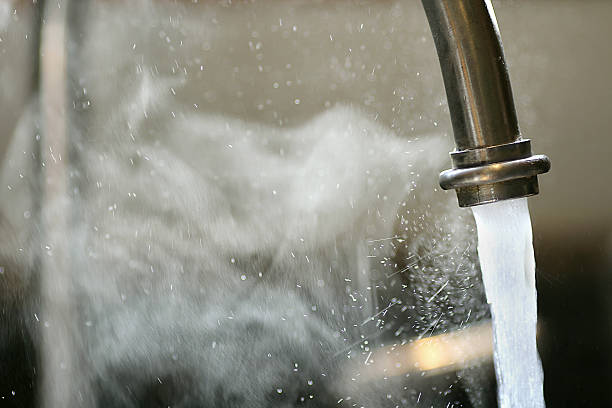
If a large pre-war Brooklyn co-op building is under-occupied (a common modern reality) or if a unit’s specific branch line is poorly insulated, the water in that localized grid can drop into the “danger zone”—between 77°F and 113°F. External Authority Link: According to the NYC Department of Health (DOHMH), these warm, stagnant conditions are perfect for the proliferation of waterborne bacteria, including Legionella pneumophila, the pathogen responsible for Legionnaires’ Disease. This is a severe, and potentially fatal, form of pneumonia. This water is meant for bathing and handwashing, not consumption, but a resident inhaling toxic steam from a hot shower is subjected to the exact same localized biological risk. Verification of your critical localized environmental profile requires definitive data, not environmental theater.
Regulations, liability, and taking control
The complexity of multi-unit urban pre-war real estate means you can never outsource the environmental safety of your home to a management company’s filing cabinet or a landlord’s generalized city-wide pass/fail average. You are the ultimate manager of your own environmental safety. Passive reliance on generalized local regulations won’t contextually verify your specific risk profile.
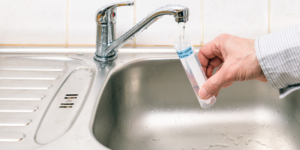
Landlords and co-op boards are often reluctant to execute comprehensive vertical grid upkeep due to immense capital requirements, which is why taking definitive control of your specialized localized environmental profile is essential. This requires definitive, laboratory-accredited scientific data tailored to your specialized localized environmental profile. Proactive urban environmental stewardship requires that you execute an independent, certified first draw water analysis that specifically optimizes for heavy metals and, if you have geological concerns, PFAS.
While immediate stopgap solutions, such as installing high-capacity point-of-use reverse osmosis systems or specialized, heat-resistant carbon block filters NSF-53 certified for heavy metal removal under your critical consummate taps, can provide immediate facility-wide environmental safety, the only permanent structural fix is a full subterranean infrastructure loop upgrade. This requires immense capital. Are you an informed co-op owner concerned about your biological liability profile and the hidden geological pressures impacting localized pre-war groundwater in Northern NYC, or are you a proactive resident looking to contextually verify your own specialized localized environmental profile? Take control of your home’s environmental safety profile. Don’t guess about the invisible chemistry of your environment. Please feel free to contact our team of water specialists today so we can help you coordinate a comprehensive, certified lead water analysis tailored directly to your specific localized property and help you verify your water is safe, legal, and permanently protected.