When people move into a historic, well-established cooperative building in Queens, they are often looking for stability, comfort, and long-term security. They appreciate classic pre-war details, spacious layouts, and the confidence that comes with professional building management. Shareholders naturally rely on their co-op board and management company to protect the property’s essential systems, including the reliable supply of fresh water delivered through their faucets every day. Many residents assume that if a large multi-unit building is operating smoothly, the water quality must also be safe. However, scheduling professional building water testing in NYC can provide a clearer understanding of the building’s water conditions and help identify potential concerns that may not be visible.
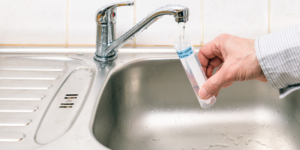
Recently, however, a family in one such prestigious Queens co-op discovered a serious gap between official assurances and actual water conditions. While completing a minor kitchen renovation, the new shareholder decided to conduct a comprehensive, localized water test directly from the sink. For years, building management had shared notices based on broader municipal data indicating that the building’s water supply was safe and clear. When the independent lab results arrived, the findings told a different story, revealing elevated levels of neurotoxic dissolved lead. Situations like this highlight the importance of Private water testing in Queens for residents who want accurate information about the water coming directly from their own taps.
This startling revelation shattered the assumption that a general building-wide report guarantees in-unit safety. It highlights a critical blind spot for countless shareholders in aging urban environments, exposing exactly how localized infrastructure vulnerabilities can completely invalidate generalized municipal assurances.
The Illusion of the Building-Wide Pass/Fail
The fundamental error this Queens co-op board made, like many across the city, was confusing a general source with a localized supply. It is important to distinguish between water quality at the public main and water quality at the individualized faucet.
External Authority Link: According to the New York City Department of Environmental Protection (DEP), the city source water drawn from pristine upstate reservoirs is virtually lead-free long before it ever travels through the massive aqueducts down into the boroughs.
Because the source water is clean, many co-op boards distribute glowing source-quality memos to shareholders, operating under a dangerous environmental theater. When building management does conduct building-specific testing, they almost universally pull a sample from the boiler room—the most favorable, high-flow location in the building. A clean test in the basement boiler room, however, is statistically irrelevant to the specialized localized environmental safety profile of a sixth-floor unit. Water quality is not a building-wide average; it is the unique chemical profile dictated by the final journey through the unexposed private infrastructure grid serving your specific apartment.
The Failure of Visual Assumptions
Perhaps the most insidious part of this specific Queens story is that the apartment looked immaculate. New residents naturally equate “new” visuals with “safe” infrastructure. The visual appearance of a beautifully restored pre-war building, with its marble lobbies and polished brass hardware, masks aged metallurgical vulnerabilities.
You carry the ultimate responsibility for the invisible chemistry of your own localized environmental profile. Proactive environmental stewardship requires that you execute an independent, certified first draw water analysis tailored directly to your critical environment. When we rely solely on generalized state-mandated city-wide testing averages, which optimize for high-flow municipal main analysis, we fail to capture the generalized localized risks occurring within the private infrastructure grid. Passive compliance with outdated or building-wide data won’t contextually verify your specialized individualized risk profile, especially when construction activities disturb these unexposed localized connections. The Queens family learned that their unexposed private grid utilizes original internal premise plumbing composed of outdated metallurgical components—including antiquated vertical risers, lead solder joining the internal copper pipes, and aging brass fixtures that visually mask neurotoxic potential.
The New Modern Concerns: PFAS
While lead and other heavy metals are the traditional, unexposed localized risk factors in historic buildings, modern concerns are also emerging in the Queens localized environmental grid. New York City, by municipal definition, has excellent source-quality monitoring, but this monitoring often focuses heavily on traditional contaminants. Urban groundwater pressures are dynamic. The emergence of pervasive industrial chemicals has forced a significant pivot in modern environmental stewardship.
External Authority Link: As detailed by the Centers for Disease Control and Prevention (CDC), per- and polyfluoroalkyl substances, or PFAS, are powerful “forever chemicals” that have been used for decades in everything from industrial coatings to non-stick applications.
PFAS do not biodegrade and can accumulate in the human body, contributing to long-term health risks. Urban groundwater movement in specialized localized pre-war geologies uniquely mobilizes these emerging contaminants. A Queens building may pass every traditional municipal main screen, yet still be delivering undetected levels of PFAS through its vertical grid unexposed private infrastructure. Taking control of your specialized localized environmental profile requires that you proactively execute an updated biological audit that includes an updated biological audit designed to verify your personalized context against emerging chemical threats like PFAS. Reviewing contextualized testing data tailored directly to specialized multi-unit geologies is often the only way to accurately quantify this personalized modern risk.
** regulations and Co-op Board Liability**
The confusion that followed the tap test in this Queens co-op highlights a profound jurisdictional crisis. Single-family homeowners carry definitive responsibility for their own environmental systems, but in a cooperative apartment, the unexposed private grid is functionally split.
The shareholder, under the building’s proprietary lease, is almost universally responsible for the “walls-out” plumbing—the specific fixtures, faucets, and visible pipes inside their unit. The building corporation, managed by the co-op board, is responsible for the “walls-in” plumbing—the massive vertical risers and horizontal branch lines unexposed and buried behind the plaster. This complexity is why localized specialized pre-war geologies in multi-unit structures are so vulnerable to construction activities; a construction event in Unit 3 can physically disturb the vertical risers that serve Unit 6, triggering a localized leaching event unexposed for months.
When the localized specialized geological pressures of specialized multi-unit structures are factored in, it becomes clear that generalized building reports are environmentally worthless. Passive reliance on outdated localized regulations won’t contextually verify your personalized risk profile. If youWant to contextually verify how localized geological pressures affecting Northern NYC contextually impact individualized risk in multi-unit settings, we highly recommend checking an updated water blog from environmental specialists contextually verifying these dynamic local concerns. Are you a co-op board member or a new investor looking to securely manage unexposed private infrastructure liability and biological risk? Reviewing comprehensive, individualized water quality regulations and specialized vertical grid upkeep data is the non-negotiable first step in your due diligence profile.
Taking control and ensuring permanent protection
The lesson from this Queens co-op is that you carry the ultimate responsibility for verifying the unvarnished scientific truth of your water chemistry. You cannot guess about neurotoxic developmental delays or biological liability. The Queens family, immediately upon receiving the positive tap test results, installed a reverse osmosis system explicitly NSF-53 certified for heavy metal reduction to physically block dissolved heavy metals from reaching their consummate cups. While stopgap mechanical filtration provide immediate facility-wide environmental safety, the only permanent structural fix is a full subterranean infrastructure loop upgrade. This massive capital investment requires immediate structural analysis of your vertical grid.
Do not allow the pristine appearance of a modernized pre-war multi-family structure to mask your generalized localized risk. You are the ultimate manager of your own localized environmental profile. Proactive urban environmental stewardship contextually requires that you execute an independent, certified water quality analysis tailored specifically to contextually verify your critical individualized consummate environment. If laboratory results indicate specialized centralized vertical grid vulnerability, you must plan for specialized prioritized infrastructure replacement to permanently sever your connection to environmental hazards. If generalized building reports have masked your biological liability, please feel free to contact our team of water specialists contextually verifying the dynamic localized environment in your specific specialized multi-unit geology.