When people think of Manhattan luxury real estate, they imagine floor-to-ceiling windows, white-glove concierge service, and state-of-the-art finishes. The assumption is that every element of the living experience, from air filtration systems to the kitchen tap, is designed to provide the highest possible quality. Residents in these high-end buildings often take for granted that the water flowing into their designer soaking tubs is not only clear but also biologically secure. However, a silent and often overlooked issue can affect even the most prestigious addresses: low chlorine residuals.
Chlorine is the primary frontline defense in the New York City water distribution system. It is added at treatment facilities to neutralize pathogens and prevent the regrowth of bacteria as water travels through miles of underground mains. For a luxury apartment building, the presence of a measurable chlorine residual at the tap helps confirm that water has maintained its protective treatment during its journey from the street into the building’s internal plumbing. Unfortunately, in some large Manhattan towers, that residual can decrease before reaching individual units, creating a localized water quality concern that many residents may never suspect.
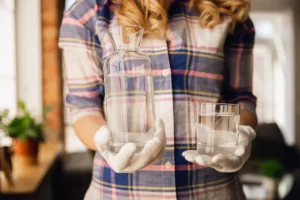
Because building plumbing systems can influence water conditions after it enters a property, regular evaluation is an important part of maintaining water safety. Manhattan apartment water testing can help property owners, building managers, and residents better understand their water quality and identify potential concerns related to plumbing, treatment levels, and overall building water conditions.
The Manhattan Distribution Paradox
New York City’s water supply is world-renowned for its purity at the source. Sourced from the Catskill and Delaware watersheds, it travels through massive aqueducts and is treated with chlorine and UV light to meet rigorous safety standards. External Authority Link: According to the NYC Department of Environmental Protection (DEP), the city monitors the distribution system 24/7 to ensure disinfectant levels are maintained according to federal mandates.
The problem, however, is that the city’s responsibility ends at the property line. Once that water enters a luxury high-rise, it enters a secondary, private distribution network. In a Manhattan skyscraper, water may sit in massive rooftop storage tanks or travel through thousands of feet of internal piping before reaching a penthouse. During this time, the chlorine residual can “decay.” If the water sits stagnant for too long, or if it reacts with organic matter or the walls of older pipes, the chlorine is used up. By the time a resident turns on their faucet, the water may have zero disinfectant remaining, leaving it vulnerable to bacterial colonization.
Why “New” and “Luxury” Doesn’t Mean “Safe”
Many residents believe that living in a newly constructed or gut-renovated building protects them from infrastructure issues. In reality, the complex plumbing systems required to service a luxury tower can actually contribute to the loss of chlorine residuals. Large buildings often have “dead ends” in their plumbing or oversized storage tanks designed for fire safety and peak demand. If a building is not at full occupancy—a common occurrence in the Manhattan luxury market where many units are secondary residences—water can sit in the pipes for days or even weeks.
This stagnation allows the chlorine to dissipate. Without a residual, the water environment becomes stagnant and warm, which is the perfect condition for the growth of biofilm. Internal Link: This localized degradation is a primary reason why we emphasize the importance of looking at specific testing data for your individual unit rather than relying on building-wide or city-wide reports. A city report tells you the water is safe in the street; it doesn’t tell you the water is safe in your 40th-floor kitchen.
The Biological Risk: Beyond Lead and Copper
Most water quality discussions in New York City focus heavily on heavy metals. While lead and copper are significant concerns in historic infrastructure, low chlorine residuals introduce a different, biological threat. When disinfectant levels drop to zero, opportunistic pathogens can take hold. The most notable of these is Legionella, the bacteria responsible for Legionnaires’ disease.
External Authority Link: The Centers for Disease Control and Prevention (CDC) notes that Legionella thrives in large, complex building water systems where disinfectant levels are low and temperatures are moderate. In a luxury Manhattan apartment, a resident might be inhaling these bacteria through the mist of a high-end rain showerhead or a decorative water feature. Without a consistent chlorine residual, the building’s internal plumbing acts as an incubator. This is why specialized regulations have become increasingly focused on “Water Management Plans” for large buildings, though many luxury residential towers still fall through the cracks of these mandates.
The Chemical Interplay: PFAS and Residuals
The loss of chlorine is not the only chemical shift occurring within luxury infrastructure. Emerging contaminants like PFAS (per- and polyfluoroalkyl substances) are also a growing concern. While PFAS are not directly related to chlorine decay, the overall “health” of a building’s water system is a holistic issue. If a building is struggling with stagnation and residual loss, it is often a sign that the water chemistry is not being actively managed.
Internal Link: As we detail in our PFAS overview, these “forever chemicals” are pervasive in urban environments. In a building where water sits stagnant, the interaction between the water and the internal plumbing components—some of which may contain PFAS-based gaskets or coatings—can be more pronounced. Residents who pay a premium for luxury living deserve to know the full chemical and biological profile of their water, not just a simplified pass/fail grade from the city.
How to Verify Your Apartment’s Safety
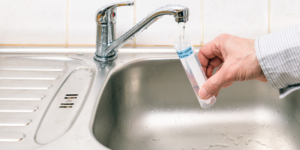
Because you cannot see or smell the absence of chlorine, the only way to verify your apartment’s safety is through point-of-use testing. Many residents are shocked to find that their water, which looks perfectly clear, has a residual of 0.0 mg/L. This means there is no protection against bacterial regrowth between the basement and their tap.
If you are concerned about the water quality in your Manhattan home, the first step is to conduct a “first draw” and a “flushed” test to compare results. Internal Link: You can learn more about the specific nuances of urban water chemistry and how to interpret your results on our blog. If a test confirms low chlorine residuals, the solution is twofold. First, the building management must be alerted to ensure they are properly flushing the system and maintaining storage tanks. Second, residents can install high-quality, point-of-use filtration systems that utilize UV light or ultra-filtration to provide a final biological barrier where the building’s chlorine has failed.
Taking Control of Your Specialized Environment
Luxury living is about more than just aesthetics; it’s about the peace of mind that your environment is healthy and secure. You shouldn’t have to guess if the water you use to brush your teeth or wash your face is biologically safe. In the complex world of Manhattan real estate, you are the ultimate manager of your own localized environmental safety.
Are you unsure if your building is maintaining adequate disinfectant levels? Don’t rely on the “newness” of your building as a shield. Would you like me to connect you with our team so we can help you coordinate a comprehensive, certified water quality analysis tailored to your specific luxury unit? Please contact us today to ensure your home’s water is as safe as it is luxurious.