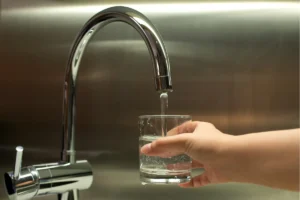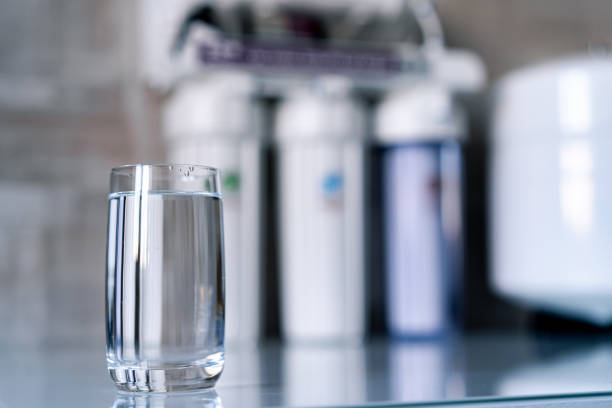
In the modern household of 2026, the water filter has become a staple appliance. From sleek pitchers in the refrigerator to advanced under-sink systems, millions of homeowners rely on these devices as a final line of defense against contaminants. The marketing is persuasive: “pure,” “crisp,” and “contaminant-free” are promises emblazoned on every box. However, a growing body of testing data suggests a sobering reality: owning a filter is not the same as having safe water. While a filter can be a powerful tool, it is often a “black box” that provides a false sense of security if not matched precisely to the chemistry of the water it is meant to treat.
Understanding why a filter might failor worse, become a source of contamination itself is essential for any homeowner concerned about their long-term health. As we navigate an era of “forever chemicals” and aging infrastructure, the gap between a filtered glass of water and a truly safe one is wider than most realize.
The “One-Size-Fits-All” Fallacy
The most significant reason a filter doesn’t guarantee safety is that different contaminants require radically different technologies. Most consumer-grade filters, particularly the popular pour-through pitchers, use activated carbon. Carbon is excellent at removing chlorine (which improves taste and odor) and some volatile organic compounds. However, it is largely ineffective against dissolved heavy metals like arsenic, nitrates, or certain radiological particles.
If your home has a specific issue with nitrates from local runoff or lead from an aging service line, a standard carbon filter may leave the most dangerous elements untouched while simply making the water taste better. This is why we emphasize on our blog that you cannot choose a solution until you have identified the problem. Without current testing data, you are essentially guessing which filter “might” work for your specific tap.
The Saturation Point: When Filters Become Fountains
Every filter has a finite capacity. As water passes through the media, the “binding sites” that trap contaminants eventually become full. Once a filter reaches this saturation point, it can no longer remove new toxins. More alarmingly, a phenomenon known as “breakthrough” can occur. This is when the accumulated contaminants on the filter media are suddenly released back into the water stream in high concentrations.
In 2026, many smart filters come with indicator lights, but these are often based on simple timers or flow meters rather than actual chemical analysis. They don’t know if your water had a sudden spike in pfas-overview or lead due to local construction. Relying on a light to tell you your water is safe is a risky gamble. A saturated filter is often worse than no filter at all, as it can concentrate the very substances you are trying to avoid.
The Biological Breeding Ground
Filters are designed to trap organic matter, which inadvertently makes them a perfect “hotel” for bacteria. Carbon filters, in particular, remove the chlorine that municipalities use to keep water sterile. Once the chlorine is gone, the moist, nutrient-rich environment of the filter media allows biofilm and bacteria to flourish.
If a filter sits unused for a few days such as during a long weekend away the bacteria can multiply rapidly. When you turn the tap back on, the “first-draw” of filtered water can contain significantly higher bacterial counts than the unfiltered water coming from the street. This is a common finding in residential testing data and a reason why some families experience unexplained digestive issues despite “filtering” their water.
Infrastructure Breaches and “The Last Mile”
Even the most advanced whole-house filtration system can be undermined by the pipes within the home itself. If a filter is installed at the point of entry (where the water enters the house), it protects the infrastructure from external contaminants. However, it does nothing to stop lead leaching from older solder joints or copper from corroding pipes located after the filter.
Furthermore, many “forever chemicals” like pfas-overview are so small and mobile that they can bypass standard sediment and carbon blocks. True protection against these modern threats often requires a combination of technologies, such as Reverse Osmosis (RO) paired with specialized resin beds. A single “stage” of filtration is rarely enough to meet the stringent regulations being set in 2026.
Maintenance: The Human Variable
A filter is only as good as the person maintaining it. In busy households, filter changes are frequently overlooked. A neglected Reverse Osmosis membrane can develop microscopic tears, allowing contaminants to bypass the system entirely. A UV sterilization bulb can dim over time, losing its ability to neutralize viruses without the homeowner ever noticing a change in the water’s appearance.
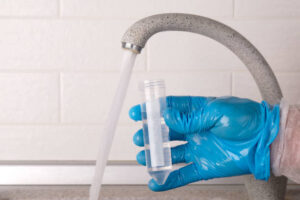
We often see cases where homeowners spend thousands on high-end systems but fail to follow the rigorous maintenance schedule required to keep the water within safe regulations. Without a professional “post-filter” test, there is no way to verify that the system is actually performing as advertised.
The False Sense of Security
Perhaps the greatest danger of a filter is the “psychological shield” it creates. Homeowners with a filter are less likely to stay informed about local water quality alerts or participate in community testing data initiatives. They assume the problem is “solved.”
This complacency can be dangerous during a localized contamination event, such as a water main break or an industrial spill. No consumer filter is designed to handle “raw” or heavily contaminated water. They are designed to “polish” water that is already close to being safe. If the source water quality drops significantly, the filter will be overwhelmed instantly.
How to Ensure Your Filter is Actually Working
If you use a filter in your home, follow these steps to move from “assumption” to “evidence”: Identify Your Enemy: Before buying a filter, get a comprehensive lab report to see what is actually in your water. Match Technology to Contaminant: If you have lead, ensure the filter is NSF-53 certified for lead reduction. If you have PFAS, look for P473 certification. Test Post-Filter: Every year, take a sample from the filtered tap and send it to a lab. This is the only way to prove the system is still effective. Follow the Schedule: Change cartridges and membranes before they expire. In water with high sediment, you may need to change them more frequently than the manual suggests. Flush the System: If the filter hasn’t been used for more than 24 hours, run the water for 30 seconds to flush out any bacterial growth that may have occurred in the media.
Conclusion: Data is the Only Guarantee
In the world of water quality, you cannot manage what you do not measure. A filter is a piece of hardware, but safety is a result of data. While a high-quality, well-maintained filter is an excellent investment, it is not a “set-and-forget” solution for a healthy home.
In 2026, as our water supplies face increasing pressure from industrial chemicals and aging infrastructure, the only way to guarantee your tap water is safe is through regular, professional testing. Use your filter as a tool, but use science as your guide.
If you are unsure if your current home filter is actually protecting your family from PFAS, lead, or nitrates, or if you need to establish a baseline for a new filtration project, our team is here to help. We provide the certified analysis and expert interpretation needed to ensure your “filtered” water is truly pure. Please visit our contact page to connect with a water quality specialist today. Let us help you verify your safety with hard facts.