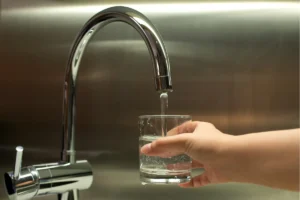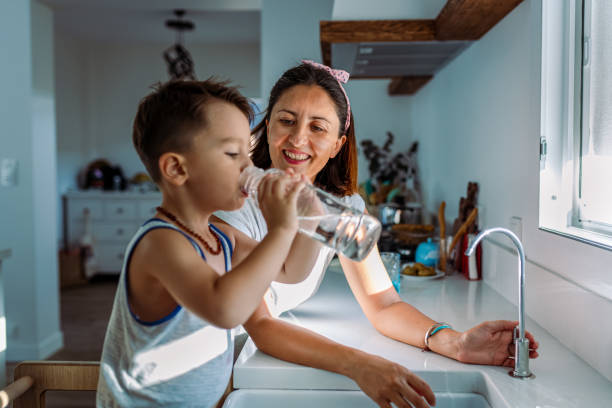
In the day-to-day rush of parenting in 2026, we often rely on our immediate senses to judge the safety of our environment. We smell the milk to see if it’s spoiled; we feel the forehead to check for a fever; and we look at the water in a glass to ensure it is crystal clear. For decades, the visual clarity of water has been our primary shorthand for “purity.” However, as pediatricians and environmental scientists are increasingly pointing out, this visual test is a dangerous oversimplification. For the most vulnerable members of our households infants and young children the most significant threats are those that the human eye cannot see, and the human tongue cannot taste.
The reality of modern infrastructure is that “clear” water can be a carrier for a host of colorless, odorless, and tasteless contaminants. When a child’s developing system is the recipient of that water, the stakes are significantly higher than they are for an adult. Understanding why clear water isn’t a guarantee of safety is the first step in moving toward a data-driven approach to family health.
The Physiological Vulnerability of the Very Young
To understand why clear-but-contaminated water is so risky, we must first look at the biology of a child. Children are not simply smaller versions of adults; they are organisms in a state of rapid, high-stakes construction. Pound for pound, an infant drinks significantly more water than an adult. For a baby fed primarily with formula reconstituted with tap water, that single source of fluid represents nearly 100% of their nutritional intake.
Because their bodies are smaller, any concentration of a contaminant is “magnified” within their system. Furthermore, children’s internal organs especially the kidneys and the blood-brain barrier are still maturing. They are less efficient at filtering out toxins and more susceptible to the neurological interference caused by heavy metals. This “exposure-to-mass” ratio is why medical regulations often have much stricter “action levels” for children than for the general population.
Lead: The Tasteless Neurotoxin
The most famous “invisible” threat is lead. Lead does not turn water brown, it doesn’t smell like sulfur, and it doesn’t leave a grit at the bottom of the glass. It is a silent traveler that leaches into water through the “last mile” of delivery: the lead service lines, the old brass fixtures, or the lead-based solder used in copper plumbing.
Even at levels that would not cause a symptom in a healthy adult, lead can have profound effects on a child’s brain development. We know from extensive testing data that lead exposure is linked to lower IQ scores, shortened attention spans, and increased behavioral challenges. Because it is sequestered in the bones and blood, the effects are often cumulative and permanent. A parent looking at a clear glass of water has no way of knowing if that “clean” liquid is actually stripping lead from the kitchen faucet’s internal components.
Nitrates and the Oxygen Challenge
For families in suburban or rural areas, nitrates are another invisible guest. Derived primarily from fertilizer runoff or failing septic systems, nitrates are completely undetectable without laboratory equipment. When an infant ingests high levels of nitrates, it can lead to methemoglobinemia, or “Blue Baby Syndrome.”
This condition occurs because nitrates interfere with the blood’s ability to carry oxygen. In a tragic irony, the water can look like the epitome of health refreshing, clear, and cold while simultaneously depriving a baby’s tissues of oxygen. Pediatricians now recommend that any home with a private well or in an agricultural local area be tested for nitrates specifically before an infant begins consuming the water.
The Persistence of PFAS
In 2026, the scientific community is sounding a louder alarm than ever regarding pfas-overview. These “forever chemicals” are a byproduct of decades of industrial use in everything from non-stick pans to waterproof clothing. Like lead and nitrates, PFAS do not change the appearance of water. They are molecular-level contaminants that bypass standard “aesthetic” filters like the ones found in many refrigerators.
For young children, the concern with PFAS lies in their potential to disrupt hormones and the immune system. Early-life exposure has been linked to decreased vaccine response and changes in liver enzymes. Because these chemicals are so stable, they stay in the body for years. A child drinking “clear” water today could be carrying those PFAS molecules into their teenage years. Our blog frequently updates the latest research on how these chemicals interact with childhood development.
Why Municipal Reports Aren’t Enough
A common point of confusion for parents is the “Annual Water Quality Report” (Consumer Confidence Report) sent by their city. While these reports provide valuable data, they only reflect the water quality at the treatment plant or in the large municipal mains.
The report cannot tell you what happens when the water enters your specific home. It doesn’t know if you have a lead gooseneck pipe buried in your yard or if your 1970s kitchen faucet is leaching copper. Relying on a city-wide report to guarantee your child’s safety is like relying on a weather report for the entire state to decide if you need an umbrella in your own backyard. It provides the “macro” view, but misses the “micro” reality of your home’s specific infrastructure.
The Role of Professional Testing
Since you cannot see, smell, or taste these threats, the only way to move from “assumption” to “assurance” is through professional laboratory testing. A comprehensive screen provides the testing data necessary to make informed decisions.
Professional testing differs from the “do-it-yourself” strips found at hardware stores. Lab-grade analysis can detect contaminants at the “parts per trillion” level the exact range where chemicals like PFAS and lead begin to impact pediatric health. This level of precision is the only way to truly “see” what is in your child’s glass.
Taking Action: How to Ensure Safety
If you are concerned that your clear water might not be safe for your children, follow these proactive steps: Targeted Sampling: Take a “first-draw” sample in the morning to capture the highest possible concentration of leached metals. Check Your Fixtures: If your home was built before 2014, your “lead-free” fixtures may still contain up to 8% lead. Consider upgrading to modern, low-lead compliant models. Use Cold Water: Never use hot tap water for drinking or making formula, as heat increases the leaching of lead and other metals from the pipes. Install Certified Filtration: If your testing data reveals an issue, choose a filter specifically certified to remove that contaminant (look for NSF/ANSI 53 for lead or NSF P473 for PFAS).
Conclusion: Clarity is Not a Quality
In 2026, we have the technology to look deeper than the surface. We must stop treating “clarity” as a synonym for “safety.” For the health of our children, we need to demand more than water that looks good; we need water that is good. By prioritizing objective data over visual assumptions, we can ensure that our home’s water is a true source of life and health for the next generation.
Your child’s developing brain and body deserve the protection that only science can provide. Don’t let a clear glass of water hide a complicated truth.
If you want to move beyond the visual check and get a definitive look at your home’s water safety, or if you are preparing for a new arrival and need a “Newborn Safety” water screen, our team is here to help. We provide the certified analysis and expert interpretation needed to secure your home’s infrastructure. Please visit our contact page to connect with a water quality specialist today. Let us help you ensure that clear water is safe water.