In the early months of a child’s life, parents are inundated with advice regarding sleep schedules, developmental milestones, and nutritional requirements. However, in 2026, a critical new recommendation is emerging from the exam rooms of pediatricians across the country: the mandatory testing of household tap water. While many parents assume that municipal water safety reports cover their individual needs, medical professionals are increasingly concerned about the “last mile” of water delivery the pipes within the home and the service lines beneath the property. For an infant, whose primary source of hydration and nutrition often comes from water-reconstituted formula, the chemical profile of that water is a foundational health factor that cannot be left to chance.
The push for domestic water analysis is driven by the fact that infants are not just “small adults.” Their physiology is unique, their consumption rates are disproportionately high relative to their body weight, and their developing systems are far more vulnerable to specific contaminants. By obtaining professional testing data, parents can move beyond assumptions and ensure their home’s infrastructure is a safe environment for their newest family member.
The Infant Vulnerability Gap
Pediatricians highlight that infants consume significantly more water per pound of body weight than adults. If a household uses tap water to prepare powdered formula, that water constitutes nearly 100% of the infant’s diet. This concentrated exposure means that even low levels of contaminants levels that might be considered acceptable under standard adult-focused regulations can pose a disproportionate risk to a baby.
Furthermore, infants lack the mature metabolic pathways required to detoxify certain chemicals. Their kidneys are less efficient at excreting heavy metals, and their blood-brain barrier is more permeable. This physiological “vulnerability gap” is why medical experts no longer view water testing as an optional home maintenance task, but as a critical component of neonatal care.
The Invisible Threat of Lead and Copper
Lead remains the primary concern for pediatricians. There is no known safe level of lead exposure for children. Even trace amounts have been linked to lower IQ scores, behavioral challenges, and developmental delays. Because lead is tasteless, odorless, and colorless, it can go undetected in a home for years.
Many parents mistakenly believe that because their city’s water treatment plant meets federal standards, their tap is safe. However, lead often enters the water after it leaves the treatment facility, leaching from old lead service lines, lead-based solder in copper pipes, or older brass fixtures. A pediatrician’s recommendation for testing is often the first time a parent considers that their own internal infrastructure could be the source of contamination. Our blog archives contain numerous case studies where “passing” city water became “failed” tap water once it traveled through the home’s plumbing.
Nitrates and “Blue Baby Syndrome”
For families living in rural areas or in communities with heavy agricultural activity, nitrates are a significant concern. Nitrates can enter groundwater through fertilizer runoff or failing septic systems. When an infant ingests high levels of nitrates, it can lead to a condition called methemoglobinemia, commonly known as “Blue Baby Syndrome.” This condition reduces the ability of the infant’s blood to carry oxygen, which can be life-threatening.
Because nitrates are completely invisible and do not affect the taste of the water, specialized testing data is the only way to verify their presence. Pediatricians in agricultural regions are now routinely asking parents about their water source and recommending annual nitrate screens to prevent this acute health risk.
The Modern Challenge of PFAS
In 2026, the conversation around infant health has expanded to include “forever chemicals” or PFAS. These man-made substances are found in a wide variety of industrial and consumer products and have become pervasive in the water supply. Emerging research suggests that PFAS exposure in early life may interfere with hormonal development and immune system function.
While national regulations for PFAS are still evolving, many pediatricians are taking a precautionary approach, suggesting that parents screen for these chemicals if they live in areas with a history of industrial activity. Our pfas-overview provides a detailed look at how these chemicals migrate through the environment and why they are particularly concerning for developing systems.
The Accuracy of the “First-Draw” Sample
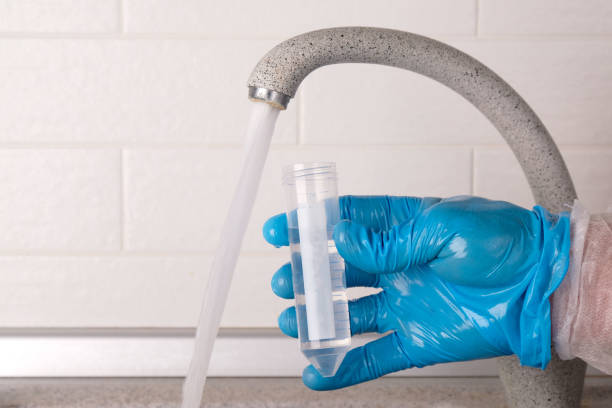
When a pediatrician urges a water test, they often specify a “first-draw” sample. This is critical for infant safety. A first-draw sample is taken after the water has sat stagnant in the pipes for at least six to eight hours, usually first thing in the morning. This sample represents the highest possible concentration of leached metals.
If a parent only tests the water after running it for several minutes, they may miss the lead or copper that has accumulated overnight the very water that is often used to prepare the first bottle of the day. Understanding the nuances of sampling is a frequent topic on our blog, as the method of collection is just as important as the analysis itself.
Moving Beyond Municipal Reports
A common point of confusion for parents is the difference between a Consumer Confidence Report (CCR) provided by the city and an individual tap test. The CCR is a snapshot of the water quality at the treatment plant or in the main distribution lines. It does not account for the lead service line under the front lawn or the lead solder in the kitchen walls.
Pediatricians are bridging this information gap by explaining that a “passing” city report does not guarantee a safe kitchen faucet. This distinction is vital for local residents who may live in homes built before the 1986 lead ban. By taking control of their own data, parents can make informed decisions about whether to use a specialized filter or switch to bottled water for formula preparation.
Remediation and Peace of Mind
The goal of water testing isn’t to create fear, but to provide clarity and a path to remediation. If a test reveals elevated levels of a contaminant, there are often straightforward solutions: Flushing the Lines: Running the water for 30 seconds to two minutes before use can significantly reduce metal concentrations. Point-of-Use Filtration: Installing an NSF-certified filter for lead or PFAS can provide a reliable barrier at the kitchen sink. Using Alternative Sources: In cases of high nitrate or lead levels, using bottled water for formula preparation is a common medical recommendation. Infrastructure Upgrades: In the long term, replacing a lead service line or old fixtures is the most permanent solution.
Conclusion: A Vital Step in Preventive Medicine
In 2026, we understand more than ever that environmental health is an inseparable part of pediatric care. A home’s water quality is not just a utility issue; it is a clinical factor in an infant’s development. By urging tap water testing, pediatricians are helping parents identify invisible risks before they become health problems.
Trusting your senses is not enough when it comes to the safety of a newborn. Clear water is not always safe water. By relying on professional testing data, you are taking a proactive step in protecting your child’s future.
If you have a new infant in the home and want to establish a baseline for your water safety, or if your pediatrician has recommended a specific lead or nitrate screen, our team is ready to assist. We provide the certified analysis and expert interpretation needed to keep your home’s infrastructure safe for your family. Please visit our contact page to connect with a water quality specialist today. Let us help you provide the purest start for your child.