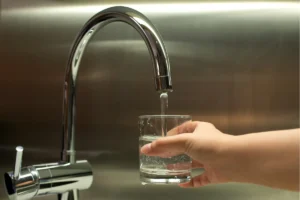
In the quiet, residential neighborhoods of Staten Island, many families take pride in maintaining their homes to the highest standards. For one family in the Westerleigh area, this meant a complete kitchen renovation in 2024, which included installing high-end, “lead-free” certified faucets and a modern dishwasher. They believed that by updating their visible hardware, they had effectively modernized their home’s safety. However, a routine check in early 2026 revealed a startling reality: while their cold water was clear, their hot tap contained elevated levels of lead. Their story serves as a critical reminder for homeowners across the Tri-State area that “modern” on the outside doesn’t always mean “safe” on the inside.
This family’s experience highlights a common misunderstanding of how domestic plumbing interacts with the broader city infrastructure. Even with brand-new fixtures, the water traveling through your home is subject to the chemical and physical realities of the pipes hidden behind your walls and beneath your street.
The “New Faucet” False Sense of Security
When the family performed their renovation, they chose fixtures labeled as compliant with current low-lead standards. Under federal regulations, “lead-free” actually allows for a weighted average of up to 0.25% lead on wetted surfaces. While this is significantly better than the brass fixtures of the 1970s, it is not an absolute zero.
The family assumed that the new faucet was the final word on their water quality. What they didn’t account for was the “upstream” journey. Their Staten Island home, like many built in the mid-20th century, still utilized copper piping joined with lead-based solder. While the cold water didn’t stay in contact with these joints long enough to leach significant amounts, the hot water system was a different story.
The Thermal Catalyst: Why the Hot Tap Failed
The most surprising element for the Westerleigh family was that only the hot water tested positive for lead. This occurs because heat acts as a catalyst for chemical leaching. Hot water is more “aggressive” than cold water; it breaks down the protective mineral scale inside older pipes more effectively and dissolves lead at an accelerated rate.
Furthermore, the family’s water heater acted as a reservoir. Over the years, microscopic lead particles from the street’s service line had entered the tank and settled into a layer of sediment at the bottom. The constant heating of this sediment allowed lead to continuously dissolve into the hot water supply. As we often discuss on our blog, the hot water tank can inadvertently become a “lead battery,” storing and releasing contaminants even if the incoming water is clean.
The Discovery: Why They Decided to Test
The family didn’t notice a change in taste or color. Lead is famously tasteless and odorless. They only decided to pursue testing data because of a nearby water main repair on their street. They noticed that after the city finished the work, their hot water pressure dropped slightly, indicating that sediment had been disturbed and was likely trapped in their faucet’s aerator.
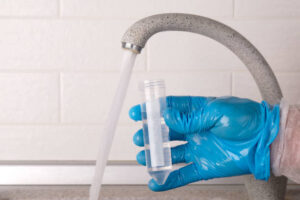
Following our recommended protocols, they performed a “split-stream” test: one sample from the cold tap and one from the hot tap. The results were clear: the cold water was well below the action level, but the hot water registered at 18 parts per billion (ppb)—surpassing the EPA’s 15 ppb threshold and far exceeding the “health-based” goal of zero.
The Hidden Infrastructure: Beyond the Walls
Staten Island’s infrastructure is a patchwork of eras. While the New York City Department of Environmental Protection (DEP) has made strides in replacing lead mains, the “private side” service lines—the pipes connecting the house to the street—remain the responsibility of the homeowner.
The Westerleigh family discovered that while their internal pipes were copper, the line leading out to the street was a legacy lead pipe. The hot water system, by drawing water more forcefully and frequently during high-demand times (like morning showers or running the dishwasher), was pulling more of this “disturbed” sediment into the house. This is why we emphasize that local knowledge of your specific street’s history is vital for home safety.
Lessons for New York Homeowners
The experience of this Staten Island family provides several actionable lessons for residents in similar high-density residential areas:
Don’t Rely on “Newness”: A new faucet cannot fix old pipes. If your home was built before 1986, there is a high probability of lead solder in your copper joints. Test Both Temperatures: When you order a test kit, ensure you are sampling both the hot and cold lines. A “pass” on the cold side does not guarantee safety on the hot side. Flush Your Water Heater: Annual maintenance of your hot water tank is not just for efficiency; it is for safety. Flushing out the sediment at the bottom removes the concentrated lead reservoir. Clean Your Aerators: Especially after local construction, unscrew the mesh screens on your faucets and rinse out any trapped grit.
The Importance of Professional Interpretation
Once the family received their results, they were initially panicked. However, having access to certified testing data allowed them to take a targeted approach rather than a scorched-earth one. They didn’t need to re-pipe the whole house; they needed to replace their lead service line and install a specialized filtration system for their hot water loop.
This targeted remediation saved them thousands of dollars and provided immediate peace of mind. By moving from “assumption” to “data,” they were able to secure their home’s health without unnecessary stress. We help families navigate these confusing results every day, as outlined on our contact page.
Conclusion: A Proactive Future
The Staten Island family’s story ended well because they chose to investigate rather than assume. In 2026, the safety of our homes depends on our willingness to look past the modern finishes and understand the systems that sustain us. Lead is a legacy issue, but it doesn’t have to be a permanent one.
Whether you live in a historic Staten Island colonial or a modern condo in Queens, the quality of your water is your most important “home feature.” Don’t let a modern faucet mask an old problem.
If you have recently renovated your home and want to verify that your water quality matches your new fixtures, or if you have concerns about the impact of nearby construction on your tap, our team is here to help. We specialize in the unique challenges of New York’s residential infrastructure. Please visit our contact page to connect with a specialist today. Let us help you ensure your “modern” home is truly a safe one.