In the modern household of 2026, we expect our utilities to be silent and odorless. When you turn on the kitchen tap or step into a morning shower only to be met with a pungent, “rotten egg” smell, it is more than just a sensory nuisance. It is a chemical distress signal from your home’s plumbing. While many homeowners immediately fear a gas leak, a sulfurous odor originating specifically from the water is usually the result of a biological or chemical reaction involving sulfur-reducing bacteria or naturally occurring sulfates. Understanding the mechanics of this odor is the first step in protecting your infrastructure and ensuring your domestic environment remains healthy.
This specific scent is almost always caused by hydrogen sulfide ($H_2S$) gas. While it is rarely a high-level toxicological threat in a municipal setting, its presence suggests that the conditions within your pipes or water heater have shifted, allowing bacteria to flourish or chemical reactions to accelerate.
The Biological Engine: Sulfur-Reducing Bacteria
The most common cause of a rotten egg smell is the presence of sulfur-reducing bacteria (SRB). These bacteria live in low-oxygen environments and feed on elemental sulfur or sulfates. As a byproduct of their metabolism, they produce hydrogen sulfide gas.
It is important to note that these bacteria are not usually pathogenic; they won’t make you “sick” in the traditional sense. However, they are prolific producers of gas. If your home has areas of stagnation such as a guest bathroom that is rarely used or a long run of pipe leading to an outdoor kitchen these bacteria can colonize the biofilm inside the lines. When the water finally moves, it carries the concentrated gas to your faucet. This is why a smell that appears only after the water has been sitting for several hours is a “smoking gun” for a bacterial issue within your internal infrastructure.
The Hot Water Heater: A Perfect Incubator
If the rotten egg odor is only present when you run the hot water, the source is almost certainly your water heater. Most residential water heaters contain a sacrificial anode rod, typically made of magnesium. This rod is designed to corrode over time to prevent the steel tank from rusting.
In many cases, the magnesium rod reacts with sulfates in the water, providing an enriched environment for sulfur-reducing bacteria to thrive. The warmth of the tank acts as an incubator, accelerating the bacterial growth and the production of $H_2S$ gas. If you find that your cold water is odorless but your shower smells like sulfur, the anode rod is likely the culprit. Replacing a magnesium rod with an aluminum-zinc alloy version often neutralizes the reaction and eliminates the odor. We discuss these specific appliance fixes frequently on our blog.
Naturally Occurring Sulfates and the Municipal Supply
While bacteria are the most common cause, sometimes the sulfur is a “source” issue. Some groundwater sources used in municipal supplies contain naturally occurring sulfates. While these minerals are generally safe and covered under secondary regulations, they can be converted into gas under the right conditions.
If the smell is present in both the hot and cold water, and it occurs at every tap in the house immediately upon turning them on, the issue may lie with the municipal supply or a localized breach in the service line. In these instances, checking the latest testing data for your neighborhood can help determine if the problem is widespread or unique to your property.
The Drain Trap Deception
Before investing in plumbing repairs, it is vital to perform a “sniff test” to ensure the smell is actually in the water. Frequently, the rotten egg odor is coming from the drain, not the tap. Over time, organic matter like hair, soap, and food particles accumulate in the P-trap. Bacteria break this matter down, releasing gas. When you turn on the faucet, the water pushes the air in the drain up and out, making it seem like the water smells.
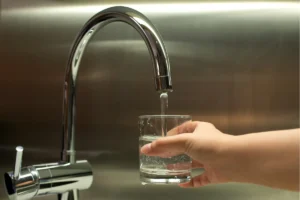
To verify, fill a glass of water and take it to another room. If the water in the glass is odorless, your problem is a dirty drain. If the glass of water still smells like sulfur, the issue is internal to your plumbing. This simple diagnostic step is one of the most popular entries in our blog, saving homeowners significant time and money.
Chemical Sensitivities and Infrastructure Risks
While hydrogen sulfide at household levels is mostly an aesthetic concern, it can be corrosive to metal. Over time, the gas can darken copper pipes and silver fixtures, leading to a “blackening” effect. This is a sign that the $H_2S$ is reacting with the metal, which can eventually weaken your pipes and lead to leaks.
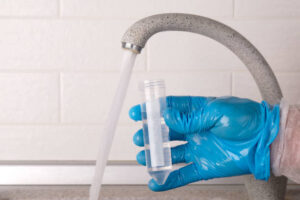
Furthermore, if the conditions are right for sulfur-reducing bacteria, they may also be right for other types of “invisible” contaminants. A shift in the biological profile of your plumbing should always be a prompt to review your testing data. In 2026, we have seen that homes with persistent odor issues are also more likely to show fluctuations in pH, which can lead to the leaching of lead or copper from older joints.
How to Solve the Sulfur Smell
If you have confirmed the smell is in your water, there are several tiers of remediation:
Flush Your Water Heater: Draining the sediment from the bottom of your tank can remove the “food source” for bacteria.
Chlorine Shock: A professional can perform a “shock chlorination” of your entire plumbing system to kill the biofilm and the sulfur-reducing bacteria.
Install Carbon Filtration: High-quality activated carbon filters can effectively “scrub” hydrogen sulfide gas from the water, though the filters must be changed regularly to remain effective.
Anode Rod Replacement: As mentioned, switching to a zinc-aluminum rod in the water heater is the gold standard for hot-water-only odors.
Conclusion: Trust Your Senses, Verify with Science
A rotten egg smell is one of the most effective diagnostic tools a homeowner has. It is a clear indication that the chemical or biological balance in your infrastructure has changed. While the smell itself is rarely dangerous, the conditions that cause it stagnation, bacteria, or mineral reactions warrant investigation.
In 2026, we don’t have to live with “swamp water” smells. By understanding the link between bacteria, sulfur, and your plumbing, you can take targeted action to restore your home’s water to its pure, odorless state.
If you are dealing with a persistent odor and need help identifying the source, or if you want to ensure your sulfur issue isn’t masking a more serious contaminant like PFAS, our team is ready to help. We provide the certified analysis and expert interpretation needed to keep your home’s water safe and fresh. Please visit our contact page to connect with a water quality specialist today. Let us help you clear the air and the water in your home.