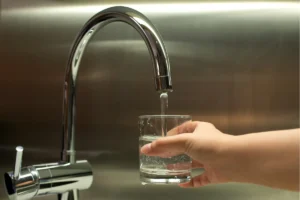
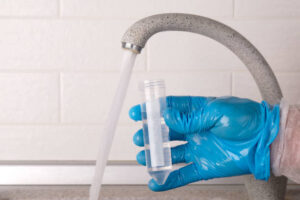
In the complex world of New York and New Jersey real estate, the Private Well Testing Act (PWTA) has long been the gold standard for ensuring water safety during property transfers. While Staten Island is largely served by municipal water, the rigorous testing culture established by the PWTA in neighboring regions has migrated across the Arthur Kill. Today, savvy buyers and cautious sellers are no longer settling for the “standard” municipal report. Instead, they are opting for PWTA-style “add-ons”—expanded testing parameters that go deep into the chemical profile of a home’s specific infrastructure. What they are finding is a series of unexpected failures that a standard city test would never have caught.
As we move through 2026, the data is becoming clear: a home’s water safety is not a binary “pass/fail” based on the city’s main line. It is a highly localized issue. On Staten Island, where many homes feature a mix of mid-century plumbing and 21st-century renovations, these expanded tests are revealing that contaminants like lead, mercury, and PFAS are often lurking in the “last inch” of the delivery system.
The Rise of the Expanded Screen
Historically, a water test during a home sale on Staten Island was a simple affair, often looking only at basic bacteria or chlorine levels. However, influenced by the comprehensive nature of PWTA regulations, more residents are requesting “add-ons” that screen for a broader spectrum of heavy metals and synthetic chemicals.
These expanded screens are designed to catch contaminants that are not typically part of a routine municipal check but are known risks in older residential areas. When these tests are applied to the tap water in neighborhoods like Tottenville or Silver Lake, the results are frequently surprising. We are seeing “unexpected failures” in homes that look perfect on the surface, proving that modern aesthetics can mask significant chemical risks.
The Lead Solder “Ghost” in Modern Renovations
One of the most frequent failures revealed by PWTA-style add-ons involves lead. While New York City has been aggressive in identifying lead service lines, the internal plumbing of the home is a private matter. Many Staten Island homes were built or renovated during the era when lead-based solder was the industry standard for joining copper pipes.
A standard test might miss this if the water is sampled after a long flush. However, the rigorous sampling methods used in PWTA-style testing—which include “first-draw” samples—are revealing that water sitting in these joints overnight is absorbing significant amounts of lead. For a family moving into a “newly renovated” kitchen, finding lead in the water is a shock. This “ghost” in the plumbing is a primary focus of the testing data we collect, as it highlights the gap between public main safety and private tap reality.
PFAS: The Forever Chemical Add-On
Perhaps the most significant “unexpected failure” in recent months involves Per- and Polyfluoroalkyl Substances (PFAS). These synthetic chemicals, used for decades in non-stick coatings and firefighting foams, are now a major concern for regulations across the country.
Because PFAS are not part of a basic water screen, many homeowners are unaware of their presence until they opt for an expanded PWTA-style add-on. On Staten Island, the proximity to historical industrial sites and transit hubs has led to trace amounts of these “forever chemicals” appearing in residential samples. Finding PFAS in a home’s tap water can be a major hurdle during a real estate transaction, but identifying it through an expanded screen is the only way to ensure proper filtration is installed. Our pfas-overview provides a deeper look at why these chemicals are becoming a standard part of the local testing conversation.
Mercury and Volatile Organic Compounds (VOCs)
Another area where expanded testing is revealing surprises is in the detection of mercury and various VOCs. While these are rarely found in the municipal supply itself, they can enter the water through localized soil contamination or through the breakdown of older, industrial-grade components in a home’s heating and cooling systems.
Staten Island’s history as a hub for small-scale manufacturing and automotive work means that the ground in certain residential pockets may hold legacy contaminants. PWTA add-ons specifically screen for these volatile compounds. When a test comes back positive for VOCs in a quiet residential cul-de-sac, it serves as a stark reminder that the history of the land doesn’t disappear just because a house was built on top of it. These findings are a regular feature of our blog, where we track emerging trends in local water quality.
The “Stagnation” Failure
Standard municipal testing often focuses on “moving” water—the water that flows through the mains. PWTA-style testing, however, is designed to catch failures that occur due to stagnation. In many Staten Island homes, guest bathrooms or basement utility sinks may go days without use.
Expanded testing is revealing that water sitting in these “dead ends” of the plumbing can reach contaminant levels that are five to ten times higher than the water at the main kitchen tap. This “stagnation failure” is a critical piece of information for families with children, as it changes how they use their home’s water. It demonstrates that safety is not just about the source; it is about the house’s specific flow patterns.
Impact on the Staten Island Real Estate Market
The discovery of these “unexpected failures” is changing how deals are done. Buyers are increasingly including “Water Quality Contingencies” in their contracts, allowing them to walk away or negotiate for remediation if an expanded PWTA-style test fails.
Sellers are also adapting. Many are now performing these tests before listing the home to avoid “inspection surprises” that could derail a closing. A seller who can provide a clean, expanded water report is in a much stronger negotiating position. This shift toward transparency is becoming the new standard in our local market, as residents realize that a home is only as healthy as its water.
How to Navigate an Unexpected Failure
If an expanded test reveals a failure in your home, it is not a reason to panic. It is an opportunity to fix a problem that was previously invisible. Most “unexpected failures” found through PWTA add-ons can be addressed with targeted remediation: Point-of-Entry (POE) Filtration: Installing a system that treats all the water as it enters the house, specifically rated for lead and PFAS. Fixture Replacement: Swapping out old brass valves and faucets that are the primary source of localized lead. Water Heater Maintenance: Flushing the sediment out of older heaters where heavy metals often settle.
Conclusion: The Value of the Deep Dive
The trend of applying PWTA-style add-ons to municipal homes on Staten Island is a sign of a more sophisticated, health-conscious public. We are moving past the era where we assume that “clear water” equals “safe water.” By opting for the expanded screen, homeowners are taking control of their environmental health and ensuring that their most valuable asset—their home—is truly a safe haven.
Don’t wait for a city-wide report to tell you what’s in your glass. The unexpected failures being found today are the saved health outcomes of tomorrow. Awareness is the first step toward a permanent solution.
If you are in the process of buying or selling a home on Staten Island and want to ensure you have the most comprehensive testing data available, or if you need to schedule an expanded PWTA-style screen for your current residence, our team is here to help. We specialize in the “deep-dive” analysis that catches what others miss. Please visit our contact page to connect with a water quality specialist today. Let us help you ensure your home’s water is as safe as it looks.