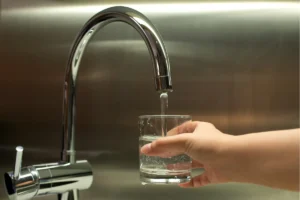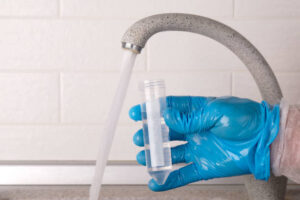
In the bustling real estate market of Jersey City, from the high-rises of Newport to the historic brownstones of Van Vorst Park, aesthetics often drive the conversation. A newly renovated apartment with sparkling fixtures and crystal-clear tap water is easy to market. However, for one young family moving into a charming multi-family rental in early 2026, that clarity was deceptive. Despite the water looking, smelling, and tasting perfect, a comprehensive baseline test revealed levels of nitrates that exceeded safe thresholds. Their experience serves as a vital lesson for urban renters and landlords alike: visual clarity is not a substitute for verified testing data.
Nitrates are colorless, odorless, and tasteless compounds that can enter a water supply through a variety of environmental and structural pathways. In an urban setting like Jersey City, where the infrastructure is a complex web of old and new, these “invisible” contaminants often go unnoticed until a specific health concern or a proactive water screen brings them to light.
What Are Nitrates and Why Are They in Urban Water?
Nitrates ($NO_3$) are naturally occurring ions that are part of the Earth’s nitrogen cycle. While they are essential for plant growth, high concentrations in drinking water are a significant health risk, particularly for infants and those with compromised immune systems.
Commonly associated with agricultural runoff in rural areas, nitrates in an urban environment like Jersey City often stem from different sources. These can include leaking sewage lines, cross-contamination from aging industrial sites, or even the breakdown of organic matter within ancient wooden or cast-iron water mains. Because nitrates are highly soluble in water, they move easily through the soil and into the plumbing of older buildings. Their presence is often a “canary in the coal mine” for a breach in the local water infrastructure.
The “Blue Baby” Syndrome: Why Nitrates Matter
The primary health concern regarding nitrates is their effect on the body’s ability to carry oxygen. When ingested, nitrates are converted into nitrites ($NO_2$), which can interfere with the oxygen-carrying capacity of hemoglobin in the blood. In infants under six months old, this can lead to a condition known as methemoglobinemia, or “Blue Baby Syndrome.”
Because the Jersey City family was preparing for a new baby, this failure was particularly alarming. The water appeared safe for mixing formula, but the high nitrate levels would have posed an immediate risk to a newborn. Under current federal regulations, the Maximum Contaminant Level (MCL) for nitrates is 10 mg/L. The rental unit in question tested at 14 mg/L a level that requires immediate intervention.
Infrastructure and the Jersey City Connection
Jersey City’s water system is a marvel of engineering, but it is also one of the oldest in the state. The water travels through miles of pipes that have been in place since the turn of the 20th century. While the city’s treatment plants effectively remove many contaminants, the journey from the main to a specific kitchen tap in a Jersey City Heights apartment can introduce new variables.
In this specific case, the nitrate failure was traced back to a localized issue: a small crack in the service line combined with a nearby sewer lateral leak. The clear water coming from the tap was actually drawing in nitrogen-rich runoff from the surrounding soil. This is why we emphasize on our blog that “local” water quality is a house-by-house reality, not just a city-wide average.
The Fallacy of the Visual Inspection
The family’s landlord was initially skeptical of the test results. Like many property owners, he believed that if the water didn’t have the “rotten egg” smell of sulfur or the “metallic” taste of lead, it was safe. This is the danger of relying on our senses to judge water safety.
Many of the most dangerous contaminants in our modern environment, including nitrates, lead, and pfas-overview chemicals, have no sensory profile. You cannot see a nitrate molecule, and you cannot taste the “forever chemicals” that may be lingering in a historic waterfront district. The only way to bridge the gap between “clear water” and “safe water” is through professional, lab-certified testing data.
Tenant Rights and Landlord Responsibilities
In New Jersey, the law regarding water quality in rentals is evolving. While the Private Well Testing Act (PWTA) mandates testing for homes with wells, municipal rentals are often left in a gray area. However, the “Implied Warranty of Habitability” requires landlords to provide water that is safe for consumption.
Once the Jersey City family presented the lab report to their landlord, the dynamic changed. The data removed the “opinion” from the conversation and replaced it with an actionable fact. The landlord was then obligated to address the issue, which in this case involved installing a high-quality Reverse Osmosis (RO) system under the sink and repairing the compromised service line. This proactive approach by the tenant not only protected their future child but also improved the value and safety of the landlord’s property.
The Role of Advanced Filtration
It is important to note that a standard carbon pitcher filter the kind found in most Jersey City refrigerators does not remove nitrates. Nitrates are dissolved ions that are too small and chemically distinct to be trapped by simple charcoal.
To effectively remove nitrates, a home needs a Reverse Osmosis system or a specialized ion-exchange unit. This is another reason why knowing what is in your water is so important. If the Jersey City family had simply bought a standard pitcher filter, they would have still been consuming dangerous levels of nitrates while believing they were safe. By using the testing data to guide their solution, they ensured they were using the correct technology for the specific threat.
Why Every Renter Should Test
Jersey City is a city of renters. Whether you are in a renovated factory loft or a traditional three-family home, you are the final consumer of a very old system. We recommend that every new tenant perform a baseline water screen for several reasons:
Establish a Baseline: Know exactly what you are drinking on day one.
Identify Silent Risks: Catch contaminants like nitrates or lead that have no taste or smell.
Hold Management Accountable: Provide data-backed evidence if remediation is needed.
Peace of Mind: Ensure that your cooking, drinking, and bathing water meets all safety regulations.
Conclusion: Clarity Through Science
The story of the Jersey City rental that failed for nitrates is a reminder that in 2026, we cannot take our water for granted. Clear water is a beautiful thing, but it is not a guarantee of safety. By embracing a culture of testing and transparency, we can protect our families and our communities from the hidden risks of aging infrastructure.
Don’t guess with your health. The science is available, the testing is accessible, and the solutions are effective. Whether you are a landlord looking to provide a premium, safe living space or a tenant looking to protect your family, information is your most valuable asset.
If you have recently moved into a Jersey City rental and are concerned that your “clear” water might be hiding invisible contaminants, or if you need to schedule a comprehensive water screen for nitrates and PFAS, our team is here to help. We provide the localized expertise and certified analysis needed to ensure your home is as safe as it looks. Please visit our contact page to connect with a specialist today. Let us help you find the clarity that only data can provide.