In the bustling neighborhoods of Jersey City, from the historic streets of Paulus Hook to the rapidly developing skyline of Journal Square, residents are increasingly aware of their environmental footprint. For one family moving into a beautifully restored brownstone in early 2026, the standard home inspection was just the beginning. While the water pressure was excellent and the pipes appeared modern, they decided to go beyond the basic requirements. By opting for expanded, high-sensitivity screening, they uncovered a hidden reality: the presence of PFAS, or “forever chemicals,” in their kitchen tap. Their story is a powerful testament to the fact that what you don’t know can indeed impact your home’s safety, and that standard municipal reports often miss the hyper-local nuances of aging infrastructure.
Jersey City’s water system is a complex network that has served the community for generations. While the city works diligently to meet all current federal and state regulations, the journey water takes from the reservoir to a specific century-old building can introduce contaminants that aren’t caught in general system-wide testing.
What is PFAS and Why Is It in Our Water?
PFAS (per- and polyfluoroalkyl substances) are a group of man-made chemicals that have been used in various industries across the globe since the 1940s. They are found in everything from non-stick cookware and water-repellent clothing to firefighting foams and industrial surfactants. The very characteristic that makes them useful their resistance to heat, water, and oil is also what makes them dangerous: they do not break down in the environment or the human body.
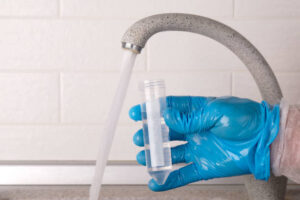
In an urban industrial hub like Jersey City, PFAS can enter the water supply through historical industrial runoff, proximity to transit hubs, or even through the breakdown of specialized coatings used in older mechanical infrastructure. For this specific family, the “extra testing” they requested was a PFAS-specific panel that looks for these compounds in parts per trillion a level of detail far beyond a standard water screen. You can learn more about the chemical behavior of these substances in our pfas-overview.
The Decision to Look Deeper
The family’s decision to test wasn’t sparked by a bad smell or strange color in the water. In fact, their water was crystal clear. They were motivated by the arrival of a new family member and a general desire for a “total health” baseline for their new home. They recognized that Jersey City, with its rich industrial history, might have “legacy” environmental issues that a standard real estate disclosure might not cover.
When they reviewed the testing data from their expanded screen, they found PFOA and PFOS levels that exceeded the latest health advisories. These chemicals are associated with a range of health concerns, including developmental issues in children and interference with the body’s natural hormones. Because they opted for the extra testing before fully settling in, they were able to address the issue before it became a long-term exposure problem.
The Local Infrastructure Factor
One of the most eye-opening aspects of this case was that the PFAS levels in this specific brownstone were higher than the average reported for the neighborhood. This suggests that the contamination was localized. In Jersey City, the underground infrastructure is a patchwork. A home’s specific service line, or its proximity to an old industrial site that has since been paved over, can create a unique “micro-environment” for water quality.
This family’s experience is a frequent topic on our blog. We often see that while the “main” water supply is safe, the “last mile” of delivery to an individual home can introduce variables that only a tap-specific test can identify. In 2026, as regulations for PFAS become stricter at both the state and federal levels, these “unexpected” findings are becoming more common in older urban centers.
The Solution: Moving from Data to Defense
Once the family had their results, they didn’t panic; they looked for a solution. PFAS cannot be removed by boiling water in fact, boiling water can actually concentrate the chemicals. They also found that basic pitcher filters, while great for taste, are often not rated to remove PFAS to the levels required for total safety.
The family invested in a high-capacity, dual-stage filtration system certified specifically for PFAS reduction. By using their testing data as a roadmap, they were able to choose a system that was scientifically proven to handle their specific chemical profile. This proactive approach turned a potential health risk into a managed household system. They now have the peace of mind that every glass of water, every pot of pasta, and every baby bottle is filled with water that meets the highest safety standards.
Why Every Jersey City Homeowner Should Consider Expanded Testing
The story of this Paulus Hook family is a reminder that in an aging city, “standard” is often the bare minimum. If you are moving into a new home, or if you have lived in your Jersey City residence for years without a comprehensive check, there are several reasons to consider an expanded screen:
Industrial Legacy: Jersey City’s history is its strength, but that history includes decades of industrial activity that can leave trace chemicals in the soil and water systems. Changing Regulations: What was considered “safe” five years ago is often being re-evaluated today. Staying ahead of the curve protects your family’s health. Property Value: As environmental awareness grows, having a “certified clean” water report for your home is becoming a significant asset during resale. Targeted Filtration: You can’t fix what you can’t see. Testing allows you to spend your money on the right filter for your specific needs.
Conclusion: Taking Control of Your Tap
In 2026, we have the tools to see what was once invisible. The family in Jersey City who found PFAS didn’t find it because their water was “bad”; they found it because they were diligent. Their story is a success because it ended with a solution. By choosing to look deeper into their home’s infrastructure, they took the most important step in homeownership: ensuring the safety of the people living inside.
Don’t wait for a municipal notice to act. Your home is your sanctuary, and the water flowing through it is its lifeblood. Understanding your specific water profile is the best way to ensure that your “forever home” isn’t being impacted by “forever chemicals.”
If you are a Jersey City resident and want to learn more about the specific PFAS levels in your zip code, or if you are ready to schedule an expanded water screen for your own home, our team is here to help. We specialize in the high-sensitivity testing needed to identify modern contaminants in historic urban environments. Please visit our contact page to connect with a water quality specialist today. Let us help you find the clarity your family deserves.